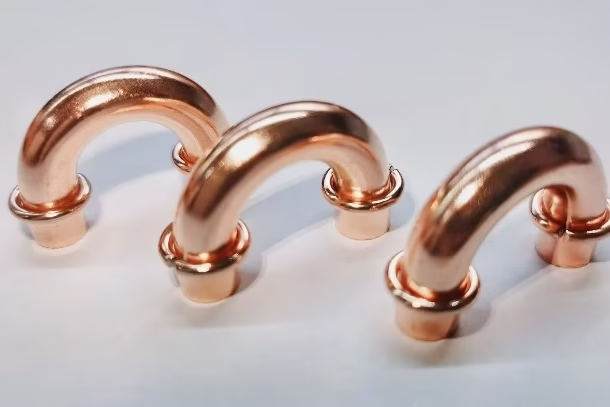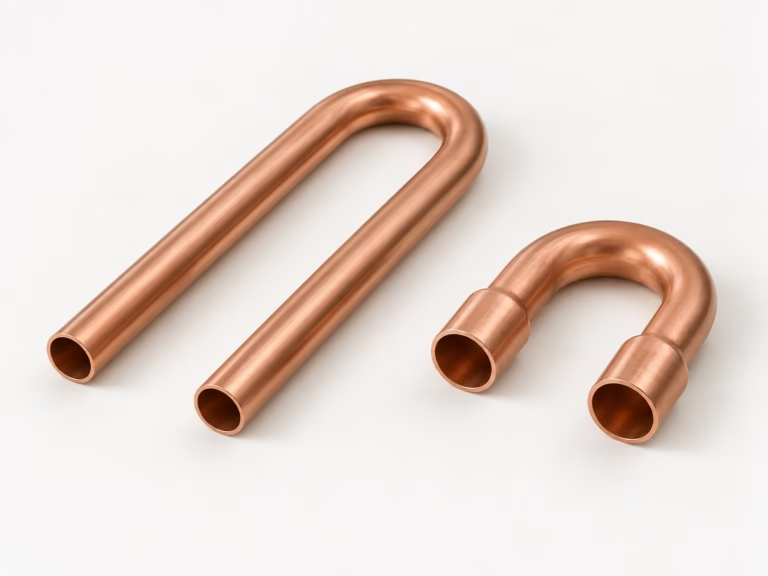
Copper return bends are used in refrigeration systems and heat exchangers to connect two tube sections through a 180-degree turn. Choosing the correct size is important for proper tube alignment, reliable joining, and efficient assembly.
The main dimensions of a copper return bend are tube outside diameter, wall thickness, center-to-center distance, bend radius, and straight-end length. These measurements determine whether the fitting matches the heat exchanger layout and provides sufficient clearance for brazing or other joining methods.
This guide explains common copper return bend sizes, dimension requirements, and selection considerations for refrigeration manufacturers and OEM buyers.
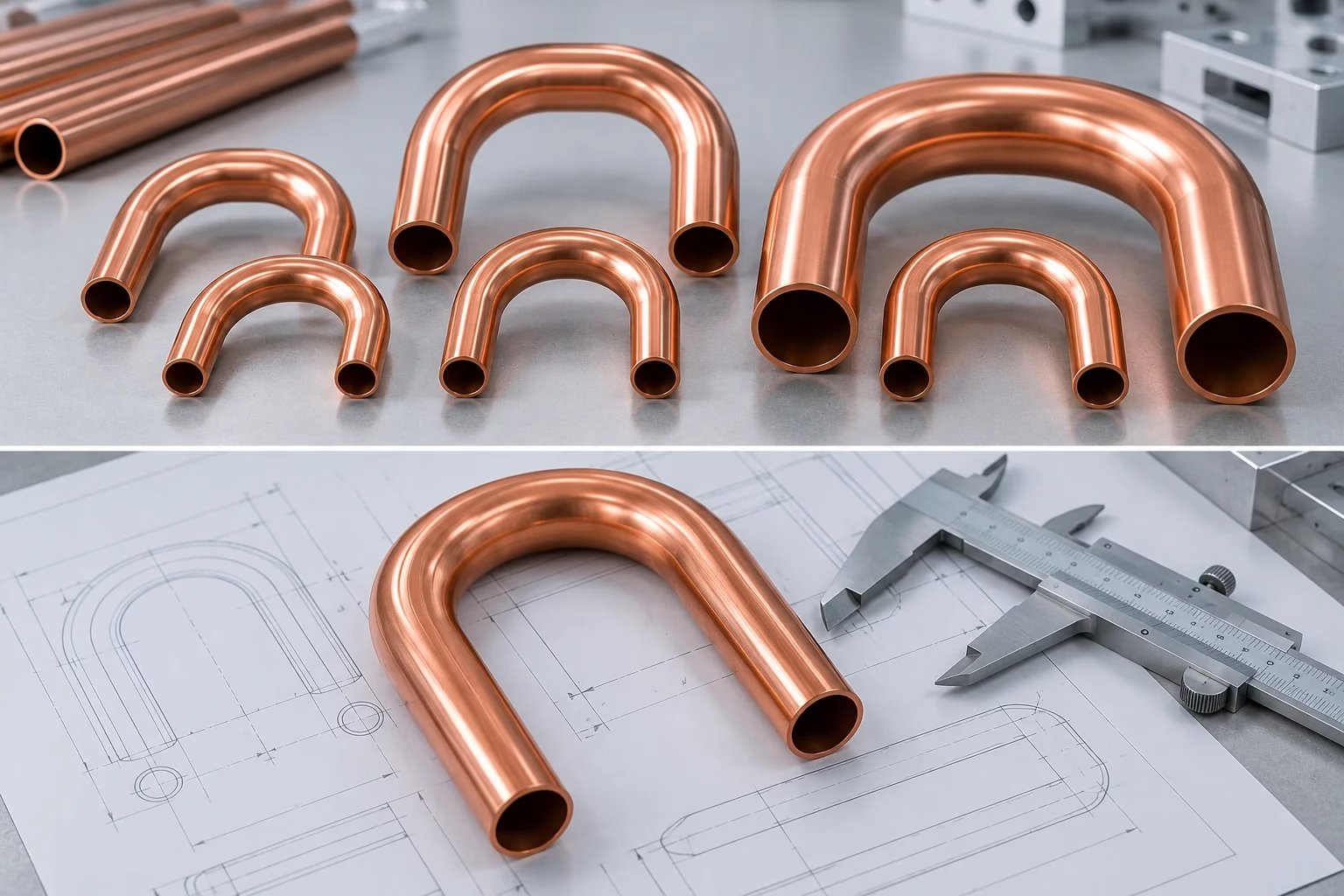
What Is a Copper Return Bend?
A copper return bend is a U-shaped tube component that redirects refrigerant flow by approximately 180 degrees. It connects two parallel tube paths, commonly in evaporators, condensers, and fin-and-tube heat exchangers.
Return bends are usually manufactured by bending copper tubing or by other suitable forming processes. Depending on the assembly design, they may have plain ends, expanded ends, or specially formed connection features.
In compact heat exchangers, the distance between the two ends must match the spacing of the connecting tubes. Even a small dimensional mismatch can create assembly difficulties or affect joint quality.
Copper return bends are sometimes called copper U-bends. The terms overlap, although U-bend components may also refer to versions with longer straight legs or specialized geometries.
Standard Copper Return Bend Sizes
Copper return bends are available in various tube diameters and center-distance configurations. Many refrigeration systems use inch-based nominal designations, while other projects specify actual dimensions in millimeters.
The following examples illustrate common tube outside diameters used in commercial copper fittings.
| Nominal Tube OD | Metric Equivalent | Typical Applications |
|---|---|---|
| 1/4 in | 6.35 mm | Compact tubing circuits |
| 3/8 in | 9.53 mm | Small refrigeration equipment |
| 1/2 in | 12.70 mm | Heat exchanger connections |
| 5/8 in | 15.88 mm | Evaporator and condenser circuits |
| 3/4 in | 19.05 mm | Larger tubing arrangements |
| 7/8 in | 22.23 mm | Commercial refrigeration systems |
| 1-1/8 in | 28.58 mm | Larger refrigeration connections |
These are tube diameter references, not a complete list of Yijin's confirmed production sizes. A matching center distance, wall thickness, and end geometry must also be specified.
Commercial return bend catalogs show that the same tube diameter may be supplied with several center distances. For example, 5/8-inch return bends can be configured for significantly different tube spacing.
For OEM orders, dimensions should be selected from the approved heat exchanger drawing rather than the tube diameter alone.
Key Dimensions of Copper Return Bends
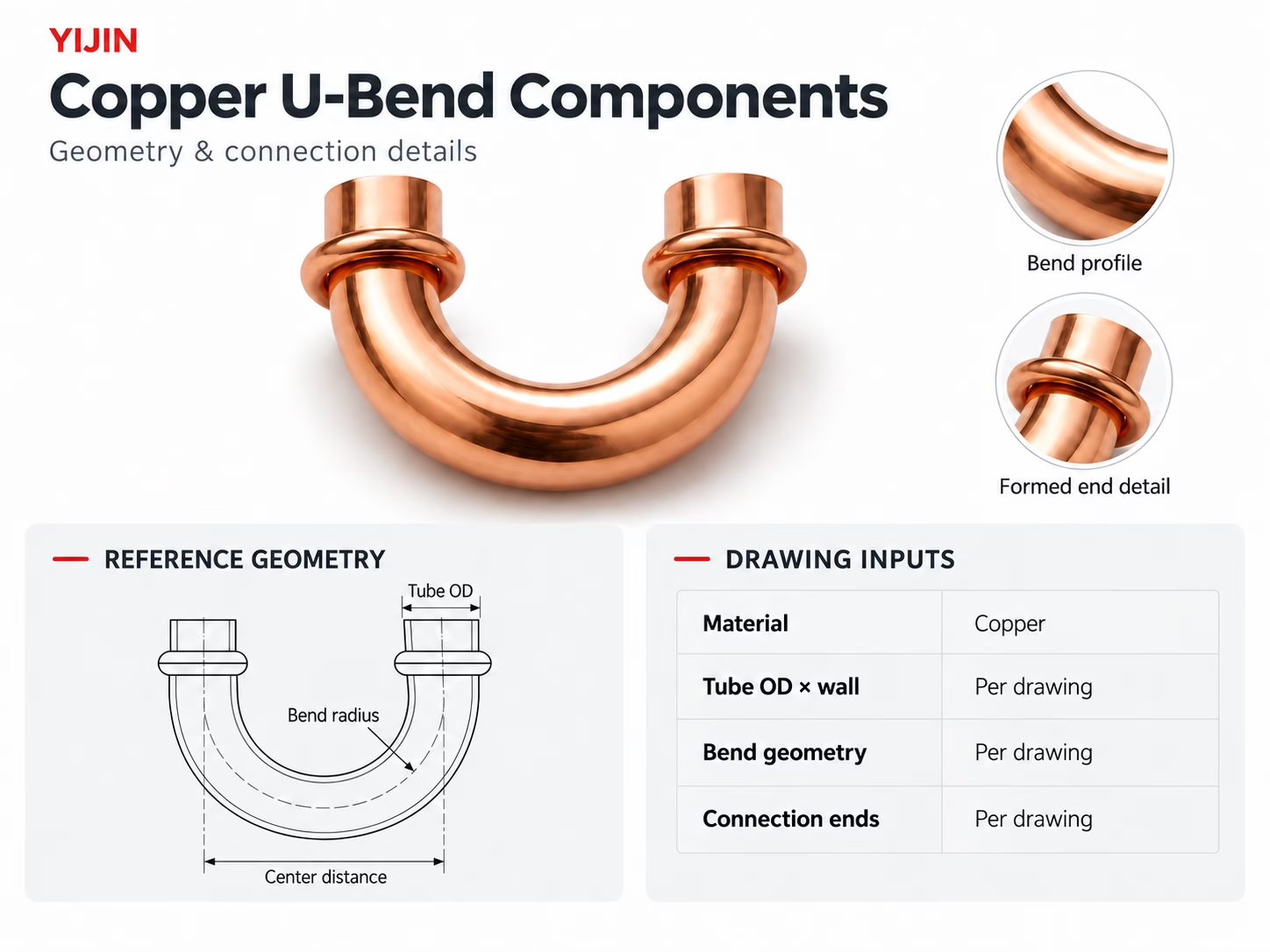
A return bend has several dimensions that directly affect its fit and manufacturing requirements.
Tube Outside Diameter and Wall Thickness
The outside diameter (OD) determines the tube connection size. It must match the intended joining interface and mating tube specification.
Wall thickness affects pressure capability, forming behavior, and joint design.
Thicker walls may provide greater resistance to deformation, but they can also require additional forming force. Thin-wall copper tubing requires suitable tooling to control flattening and wrinkling during bending.
For refrigeration applications, confirm the material standard, wall thickness, and applicable pressure requirements before selecting the component.
Center-to-Center Distance and Bend Radius
Center-to-center distance, often called tube pitch, is the distance between the centerlines of the two parallel ends of a return bend.
For an ideal 180-degree semicircular centerline with parallel straight legs, the center distance is twice the centerline bend radius.
For a symmetrical semicircular 180° return bend, center distance C = 2 × centerline radius R. This relationship is conceptual; the approved drawing defines the finished geometry.
For example, if the required center distance is 30 mm, an ideal semicircular return has a centerline radius of 15 mm.
Actual components may include transitions, formed ends, or non-semicircular geometry. In these cases, center distance and bend radius should be dimensioned separately.
Straight Length and End Connections
Straight-end length provides space for insertion, brazing, and assembly handling.
A return bend may have equal or unequal leg lengths, depending on the application. Connection ends can be plain, expanded, reduced, or otherwise formed according to the customer drawing.
When using socket-type connections, specify the mating diameter, insertion depth, and required clearance. These details are essential for reliable fitting and joining.
How to Choose the Right Copper Return Bend Size
Selecting a return bend starts with the existing heat exchanger design.
First, confirm the mating tube outside diameter. The return bend connection must match the tube assembly and joining requirements.
Next, determine the tube pitch. Measure the center-to-center distance between the two connecting tubes. This dimension controls the position of both return bend ends.
Then, review the available installation space. Check the bend height, outside envelope, and clearance from fins, supporting plates, and nearby components.
Finally, confirm wall thickness and end geometry. These details should comply with the approved refrigeration circuit design and manufacturing specification.
For repeat production, an approved sample can help confirm assembly fit before larger production quantities are released.
Manufacturing Tolerances and Quality Control
Return bend tolerances are important because multiple fittings may be installed across a single heat exchanger.
The most critical inspection points usually include center distance, outside diameter, end alignment, straight length, and bend shape.
During manufacturing, unsuitable forming conditions can cause wall thinning, flattening, surface cracks, or wrinkles. Inspection should focus on the features that affect assembly fit and service performance.
For refrigeration components, internal cleanliness is also important. Residual moisture, particles, or processing contaminants can affect subsequent assembly and system operation.
Dimensional tolerances and inspection methods should be defined in the drawing or purchase specification. Where necessary, a checking fixture can verify whether the bend fits the intended tube arrangement.
Custom Copper Return Bends for OEM Applications
Standard catalog fittings may not match every heat exchanger layout. Custom return bends are often required when tube pitch, end length, or connection geometry differs from standard configurations.
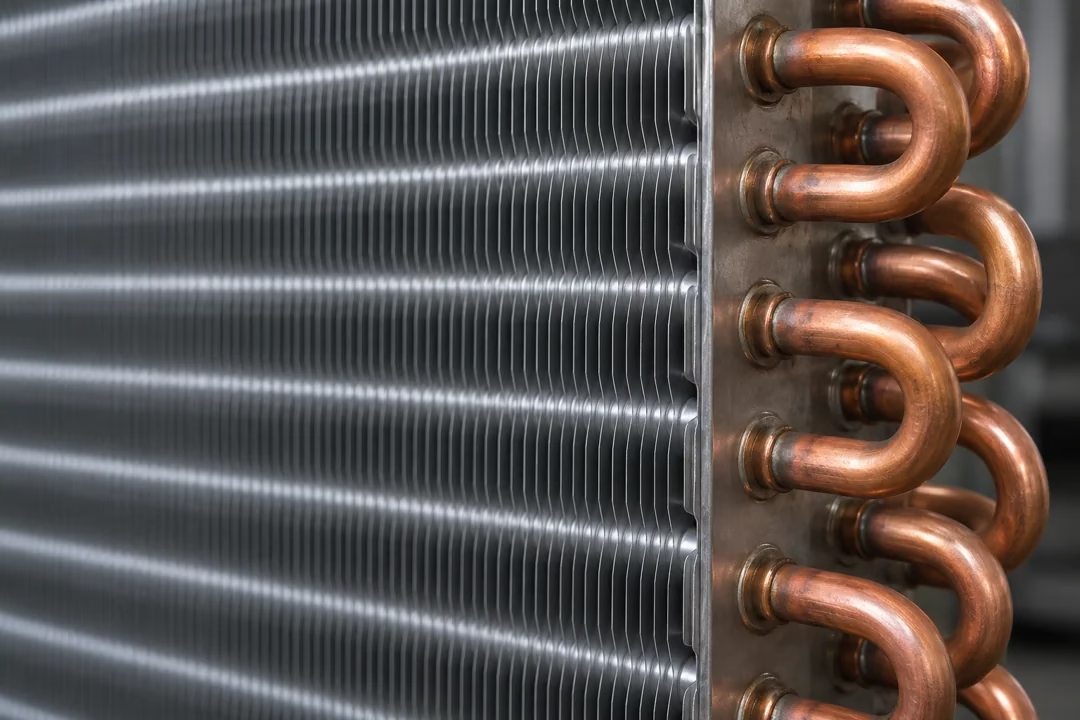
Common customization requirements include different tube outside diameters, center distances, bend shapes, and end-forming features.
Yijin manufactures Copper Return Bends for refrigeration and HVAC/R tube assemblies.
Our manufacturing review covers copper material requirements, tube dimensions, bending geometry, and connection ends. We work from the approved drawing to establish the component specification before production.
For projects requiring longer straight legs or additional tube routing, our Copper U-Bend Components and formed copper tube assemblies provide related design options.
What to Include in Your RFQ Drawing
A complete engineering drawing helps avoid specification errors and unnecessary sample revisions.
For a copper return bend quotation, provide the tube outside diameter, wall thickness, center distance, bend radius, straight-end length, and end connection details.
The drawing should also identify the required copper grade, applicable material standard, critical tolerances, and intended joining method.
Include the estimated order quantity and any inspection, cleanliness, packaging, or documentation requirements.
When the component must fit an existing heat exchanger, supplying a mating layout or approved reference sample can improve dimensional review.
Frequently Asked Questions
1. What are the common sizes of copper return bends?
Copper return bends are produced in different tube diameters, including 1/4, 3/8, 1/2, 5/8, and 7/8 inch. Larger diameters are also used in refrigeration systems. However, tube diameter alone does not define the fitting. Center distance, bend radius, wall thickness, and end geometry must also match the application.
2. What is the center distance of a copper return bend?
Center distance is the distance between the centerlines of the two parallel connection ends. It normally corresponds to the spacing of the tubes being joined. For an ideal 180-degree semicircular bend, center distance equals twice the centerline radius. Custom return bends may have different geometry and require separate dimensions.
3. How do I calculate the bend radius of a copper return bend?
For a symmetrical 180-degree bend with a semicircular centerline, divide the center distance by two. For example, a 40 mm center distance corresponds to a 20 mm centerline radius. This relationship does not apply automatically to every formed geometry. Follow the drawing for nonstandard or transition-shaped bends.
4. What wall thickness should I use for refrigeration return bends?
Wall thickness depends on the design pressure, tube diameter, material condition, joining method, and applicable equipment requirements. A thicker wall is not automatically the best choice for every assembly. The refrigeration system designer should establish the required wall thickness and acceptance criteria before the component is manufactured or replaced.
5. Are copper return bends and copper U-bends the same?
The terms are often used interchangeably because both describe a tube that changes direction by approximately 180 degrees. Return bends commonly refer to compact connections in heat exchangers, while U-bends may include longer legs or specialized shapes. The engineering drawing, rather than the product name, should define the supplied component.
6. Can Yijin manufacture custom copper return bend sizes?
Yes. Yijin manufactures drawing-based copper return bends for refrigeration and HVAC/R applications. Customers can specify tube diameter, wall thickness, center distance, bend radius, straight lengths, and connection-end geometry. Our team reviews the material, tooling, inspection requirements, and quantity before confirming the manufacturing arrangement and quotation.