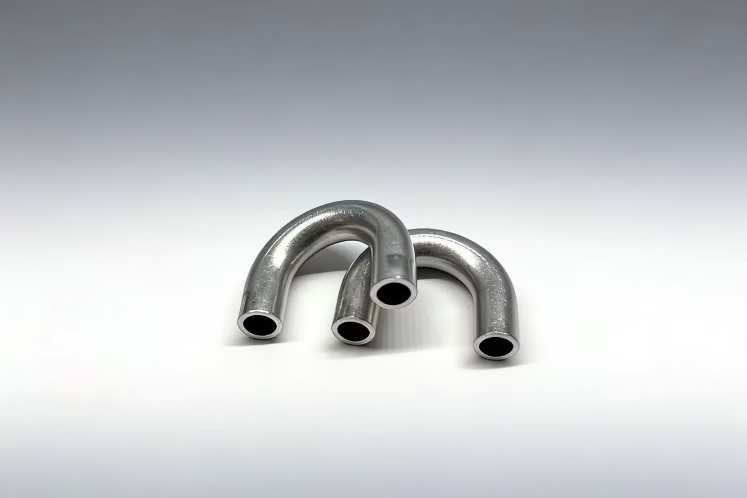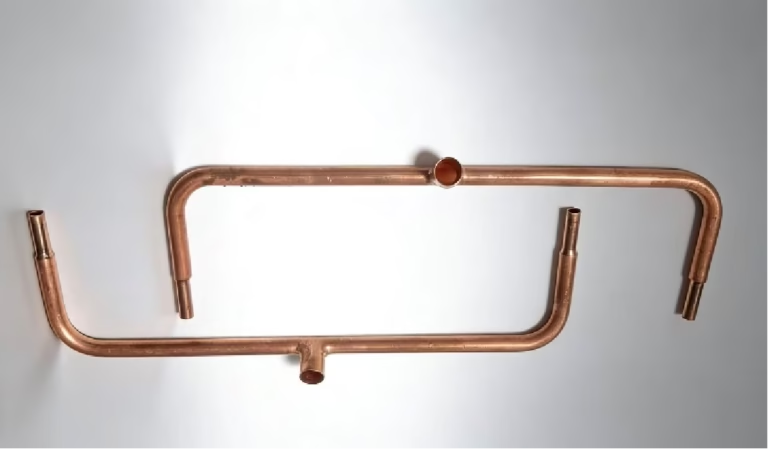
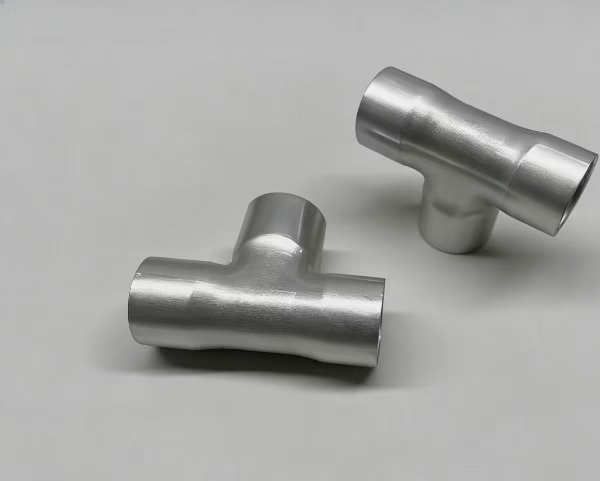
Open any outdoor condensing unit, display cooler or compact heat exchanger, and you will usually find a mixed picture: copper tubes and fittings where joint integrity and thermal conductivity matter, aluminum sections where weight, material cost and routing flexibility matter, and formed assemblies that route refrigerant around tight mechanical layouts. Yijin manufactures both sides of that split — copper tee and branch fittings, aluminum tees, aluminum U-bends and return bends, and custom formed copper tube assemblies — so it helps to understand why engineers keep this copper-and-aluminum combination.
Copper where the connection must be reliable
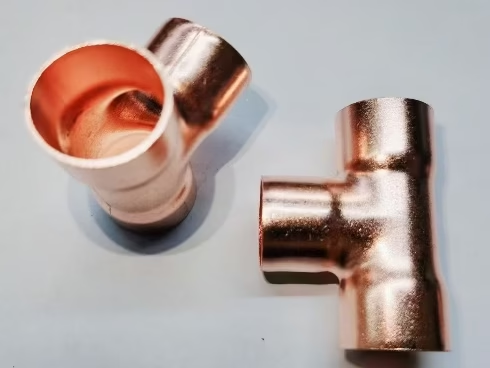
Copper remains the common choice for refrigeration lines because it has well-established forming and joining behavior, proven pressure performance in typical HVAC/R working conditions, and a broad body of material standards buyers recognize. Our copper tees and branch fittings are reviewed against the client’s specified copper grade — including TP2 / C12200-class requirements where applicable — before production. The three-port junction in a tee or the split connection in a branch fitting must match the mating ports exactly; a good copper fitting’s value is in geometry repeatability and clean internal surfaces, not just the metal itself.
Aluminum where weight and layout efficiency matter
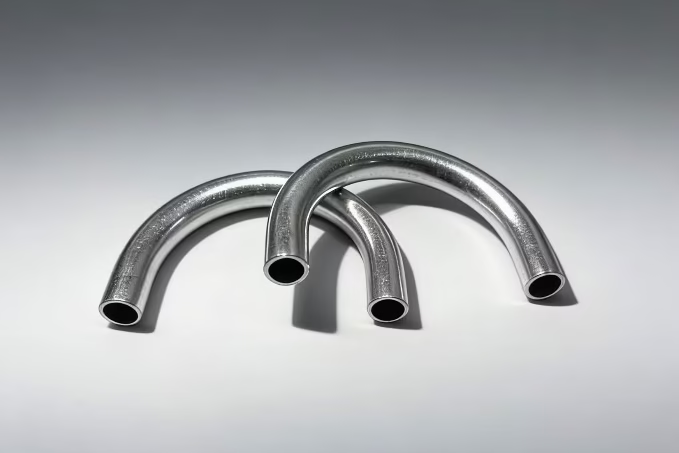
Aluminum is widely used in return bends, U-bends and section components because it is lighter, easier to route in compact tube pitches, and useful where the design team is optimizing material cost alongside system performance. Our aluminum U-bends and return bends are formed around the specified alloy and temper, tube outside diameter, wall thickness, center-to-center distance, bend radius, leg length and end configuration. In a heat exchanger or condenser array, the return bend that reverses flow between parallel rows has to fit the tube pitch without colliding with neighboring rows — that geometry comes straight from the assembly layout drawing.
Formed tube assemblies solve space problems
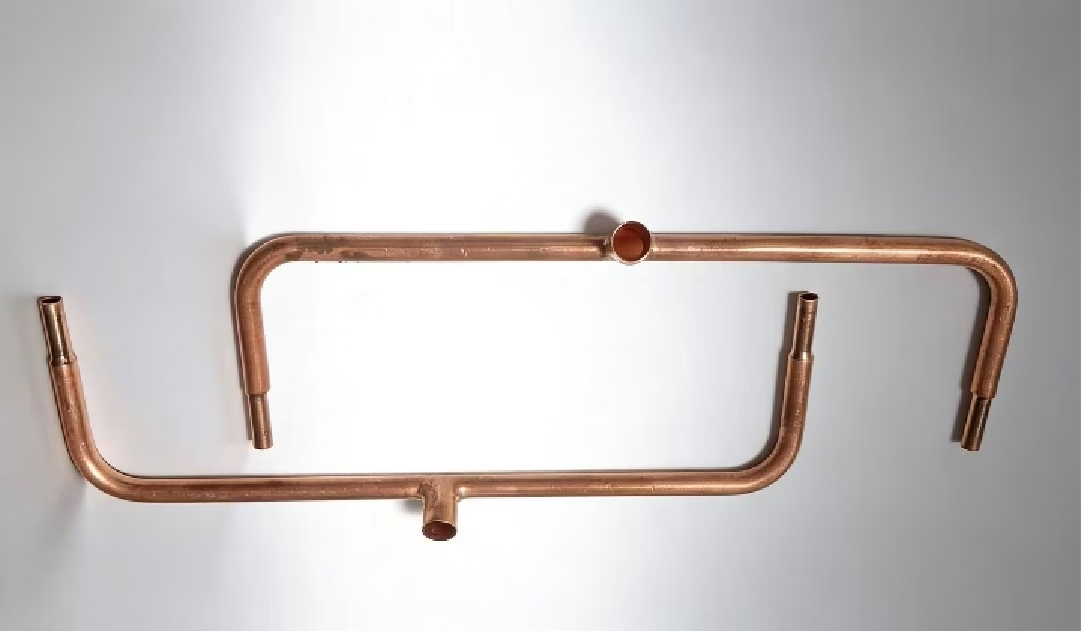
Many modern systems are not assembled from straight stock and standard catalog elbows. Designers send a full tube routing to the manufacturer and ask for a pre-formed assembly that drops into the unit. Yijin’s custom tube forming, cutting and end-forming work follows the customer’s approved drawing, covering branch position, port orientation and end details. This reduces the installer’s on-site routing work and lowers the risk of mis-fabricated connections.
What buyers should specify before sourcing
Across copper and aluminum alike, a reliable quotation depends on the same input set:
- Material grade, alloy and temper standard
- Outside diameter and wall thickness
- Run and branch sizes, branch angle and center height
- Bend radius, center-to-center distance and leg length
- Tolerances, mating ends and connection type
- Required cleanliness and inspection standard
- Quantity, application and delivery date
Without these details, any price quoted is only a rough catalog estimate. With the drawing, a manufacturer can confirm tooling feasibility, inspection scope and a realistic lead time.