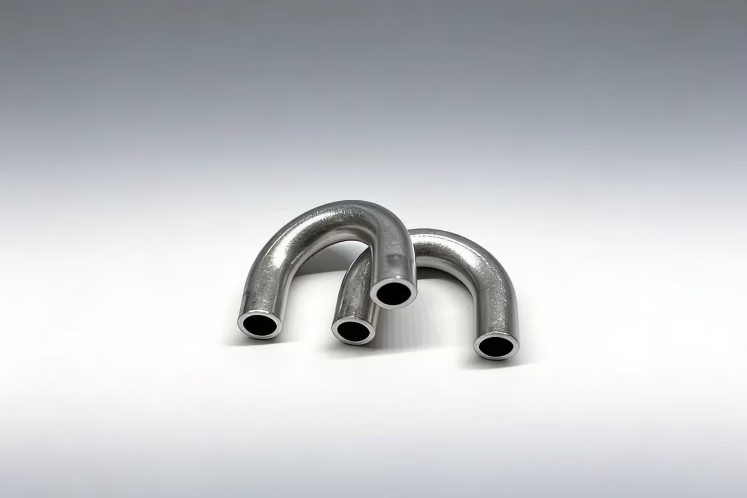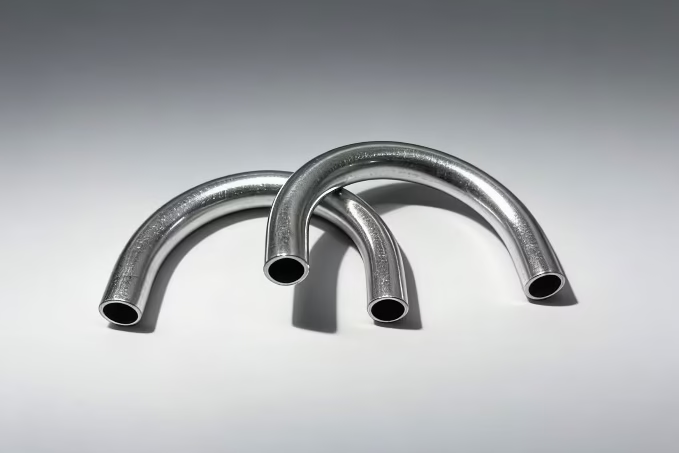
Aluminum tube bending is widely used to manufacture lightweight components for refrigeration equipment, heat exchangers, automotive systems, and industrial tube assemblies. It allows aluminum tubing to be formed into U-bends, return bends, elbows, and custom shapes without adding separate fittings at every change in direction.
However, aluminum tubing can crack, wrinkle, flatten, or spring back if the material and bending process are not properly matched.
Successful aluminum tube bending depends on five factors: alloy, temper, tube diameter, wall thickness, and bend radius. Tooling and process control are equally important when tight bends or precise dimensions are required.
This guide explains common bending problems and practical design considerations for engineers and OEM manufacturers.
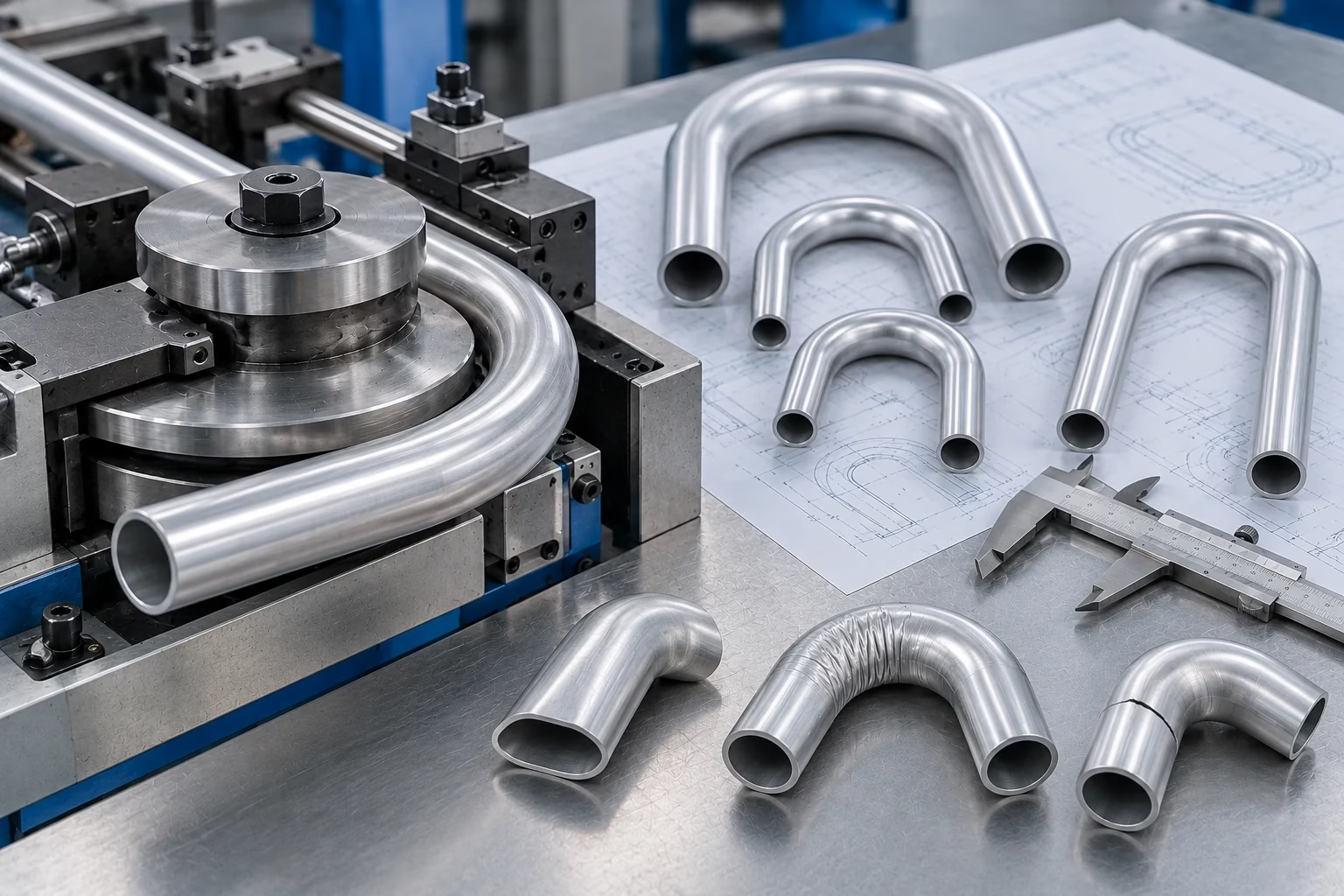
Can Aluminum Tubing Be Bent Without Cracking?
Yes. Aluminum tubing can be bent without cracking when the material condition, bend radius, and forming method are suitable.
The most important consideration is that different aluminum alloys and tempers have different forming characteristics.
Softer materials generally allow greater deformation before cracking. Harder, higher-strength tempers may require larger bend radii or additional processing.
For example, a tube supplied in an annealed condition may be easier to form than a comparable tube supplied in T6 temper.
Cracking often occurs on the outside of a bend, where the material experiences tensile strain.
To reduce this risk, engineers should select a suitable alloy and temper, avoid unnecessarily tight radii, and confirm the forming method before approving the component design.
How Aluminum Alloy and Temper Affect Bending
Aluminum tubing is available in different alloy series and material conditions. These differences directly affect bendability.
The following table provides general engineering guidance for several common aluminum alloys.
| Aluminum Alloy | Typical Forming Characteristics | Design Considerations |
|---|---|---|
| 1100 | Excellent formability in soft tempers | Suitable for relatively simple formed components |
| 3003 | Good formability, particularly in O temper | Useful for tubing requiring ductility |
| 5052 | Good formability in suitable tempers | Often considered where strength and corrosion resistance matter |
| 6061 | Temper-dependent formability | T6 generally requires greater bend radius than O or T4 |
| 6063 | Suitable for many extruded tube profiles | Alloy temper and wall thickness strongly influence bending |
The alloy number alone is insufficient for specifying a bent tube. For example, 6061-O and 6061-T6 have significantly different bending behavior.
For demanding shapes, a softer temper such as O or T4 may be selected where the alloy and production route permit. If post-forming heat treatment is required, the process must be qualified to achieve the intended final properties.
Industry guidance from Hydro and European Aluminium likewise identifies alloy, temper, tooling and bending geometry as important forming considerations.
Aluminum Tube Bend Radius: What Should You Consider?
Bend radius determines the curvature of an aluminum tube and affects the amount of deformation during forming.
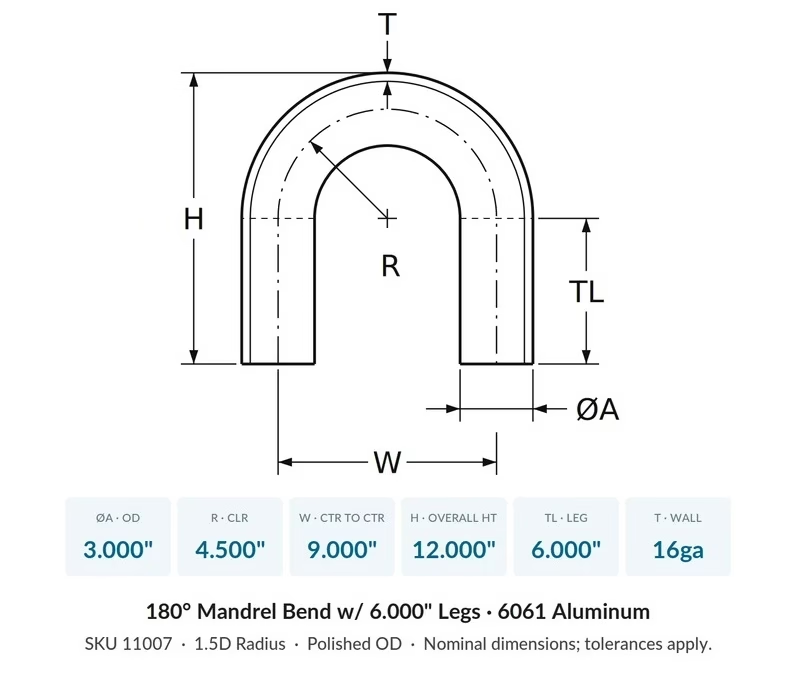
It is commonly specified as the centerline radius (CLR), measured from the center of curvature to the centerline of the tube.
The bend-radius ratio provides a useful starting point:
Bend radius ratio = CLR / tube OD.
For example, a 12 mm outside-diameter aluminum tube with a 36 mm centerline radius has a bend-radius ratio of 3D.
A larger bend radius generally reduces forming difficulty. A smaller radius increases the risk of cracking, wall thinning, wrinkling, and flattening.
CLR = centerline bend radius; OD = tube outside diameter.
There is no universal minimum bending radius for all aluminum tubes. The allowable radius depends on alloy, temper, wall thickness, tooling support, and the permitted deformation.
For new OEM designs, a larger radius is generally preferable where installation space allows. Tight-radius components should be evaluated through forming trials.
Common Aluminum Tube Bending Methods
Several bending processes are used depending on tube geometry and required production accuracy.
Rotary Draw Bending
Rotary draw bending forms the tube around a fixed-radius die. It provides controlled bend angles and is suitable for repeatable U-bends, elbows, and multi-bend components.
CNC-controlled equipment can improve consistency for production requiring several bends at different orientations.
Mandrel-Supported Bending
Mandrel-supported bending uses internal tooling to help maintain the tube cross-section during forming.
It is particularly useful for thin-wall aluminum tubing and bends where flattening or wrinkling must be controlled.
A suitable mandrel, pressure die, and other support tooling can improve bend quality, although they increase tooling requirements.
Roll Bending
Roll bending uses multiple rollers to produce gradual curves.
It is generally more suitable for large-radius bends than compact refrigeration return bends.
The preferred process depends on the finished tube geometry, required tolerances, production quantity, and tooling availability.
Common Aluminum Tube Bending Problems and Solutions
Most bending defects are associated with unsuitable material selection, excessive deformation, or inadequate tooling support.
| Problem | Typical Cause | Recommended Action |
|---|---|---|
| Cracking | Tight radius or insufficient ductility | Review alloy, temper and radius |
| Wrinkling | Excessive compression on inner bend | Improve support tooling |
| Flattening | Insufficient cross-sectional support | Use suitable dies or mandrel |
| Wall thinning | Stretching on outer bend | Increase radius or revise process |
| Springback | Elastic recovery after forming | Adjust bend compensation |
| Surface scratches | Tool contact or worn dies | Inspect and maintain tooling |
Cracking is often the most serious defect. A cracked tube should not be accepted for a pressure-containing refrigeration circuit.
Wrinkling normally appears on the inner side of the bend. It can interfere with installation and reduce internal flow area.
Flattening, also called ovality, occurs when the tube cross-section changes from circular to oval. A suitable internal support system can reduce this problem.
Springback occurs after the forming force is released. It can result in incorrect angles or end positions unless the process includes appropriate compensation.
The finished component should be evaluated against the approved drawing and application requirements.
Design Tips for Custom Bent Aluminum Tubing
Good component design reduces tooling complexity and production variation.
1. Select the alloy and temper first. Material condition affects the feasible bend radius and manufacturing method.
2. Avoid unnecessarily tight radii. A larger radius generally improves forming reliability and reduces the risk of cracking.
3. Provide sufficient straight length. Bending equipment requires space for clamping and supporting the tube. Very short sections between bends may complicate production.
4. Define critical dimensions. Specify outside diameter, wall thickness, centerline radius, bend angle, leg length, and connection-end geometry.
5. Consider joining requirements. For refrigeration systems, the formed component must also suit the approved joining process and mating material.
6. Confirm the design through samples. Prototype inspection is especially useful for thin-wall tubing, complex shapes, and tight installation spaces.
For repeat OEM production, clear datum references and reasonable tolerances help maintain consistent assembly dimensions.
Aluminum Tube Bending Applications in Refrigeration
Aluminum tubing is used in various refrigeration and heat exchanger designs where low weight and suitable thermal performance are important.
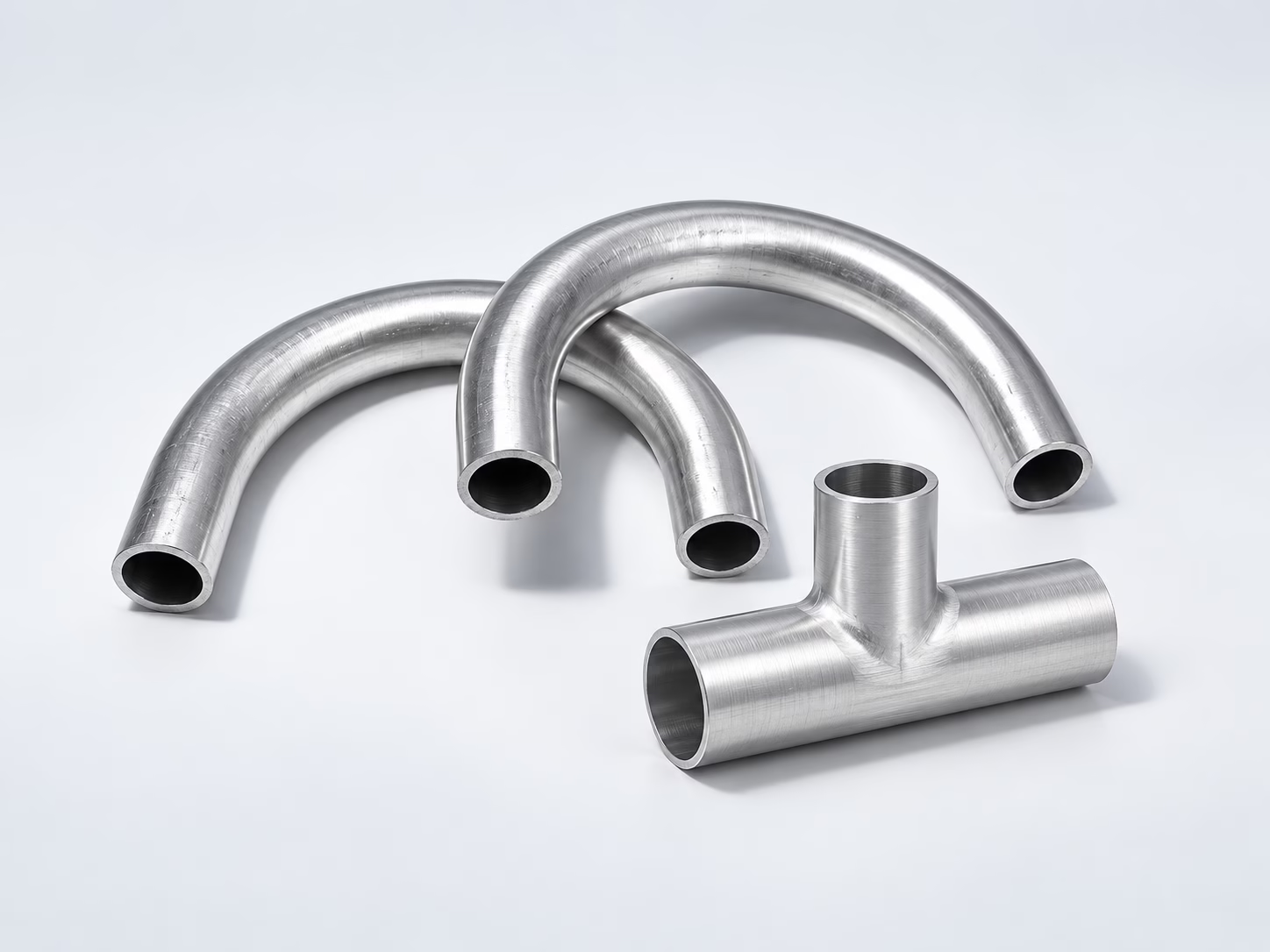
Aluminum Return Bends
Compact 180-degree return bends connect parallel tube sections in compatible heat exchanger circuits.
Their center-to-center distance, bend geometry, and end dimensions must match the mating tubes.
Aluminum U-Bend Components
Aluminum U-bends are used where a tube needs to change direction while maintaining a continuous flow path.
Straight-leg lengths and connection locations can be adjusted to suit the equipment layout.
Custom Refrigeration Tube Assemblies
Bent aluminum tubing may also be incorporated into larger assemblies requiring multiple bends and specific connection features.
For these applications, forming, joining, corrosion protection, and inspection requirements should be evaluated as part of the complete assembly design.
Custom Aluminum U-Bends and Return Bends from Yijin
Yijin manufactures aluminum tube components for refrigeration and HVAC/R equipment according to customer drawings.
Our product range includes Aluminum U-Bend Components and Aluminum Return Bends.
We review alloy and temper requirements, tube dimensions, bend geometry, connection ends, and critical inspection points before confirming the production specification.
For OEM projects, send us your technical drawing, material requirements, expected quantity, and inspection criteria. Our team can assess the component design and provide a quotation based on the approved requirements.
Frequently Asked Questions
1. Can aluminum tubing be bent without breaking?
Yes. Aluminum tubing can be bent without cracking when the alloy, temper, bend radius, and tooling are suitable. Softer tempers generally offer better forming flexibility than harder conditions such as T6. Tight bends require careful process control, especially with thin-wall tubing. Trial bending helps confirm whether a proposed design can meet its dimensional requirements.
2. What is the minimum bend radius for aluminum tubing?
There is no single minimum bend radius for every aluminum tube. The required radius depends on outside diameter, wall thickness, alloy, temper, and bending method. A larger radius usually reduces deformation risk. When designing tight-radius U-bends or return bends, engineers should confirm the proposed geometry through manufacturer review and forming trials.
3. Why does aluminum tubing crack when bent?
Cracking normally occurs when the outer wall of the tube experiences more stretching than the material can withstand. Common causes include a tight bend radius, unsuitable alloy temper, excessive deformation, or poor tooling conditions. Selecting a more formable material condition and increasing the bend radius can help reduce cracking.
4. How can I prevent aluminum tubing from flattening during bending?
Flattening can be reduced by using suitable bending dies, proper tube support, and an appropriate bend radius. For thin-wall tubing, internal mandrel support may be necessary. The alloy, temper, and wall thickness also influence the result. The finished tube should meet the ovality and dimensional requirements defined in the engineering drawing.
5. Is 6061 aluminum tubing suitable for bending?
Yes, but its formability depends strongly on temper. 6061-O and 6061-T4 are generally more suitable for demanding bends than 6061-T6. T6 tubing can still be bent when the geometry and process are appropriate, but it often requires a larger bend radius. The final material condition and strength requirements should be reviewed before production.
6. Can Yijin manufacture custom bent aluminum tubing?
Yes. Yijin manufactures drawing-based aluminum U-bends and return bends for refrigeration and HVAC/R applications. Customers can specify alloy, temper, tube diameter, wall thickness, bend radius, straight lengths, and connection details. Our team reviews the component geometry and inspection requirements before confirming manufacturing feasibility and quotation.