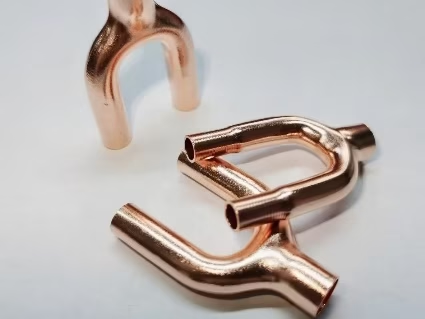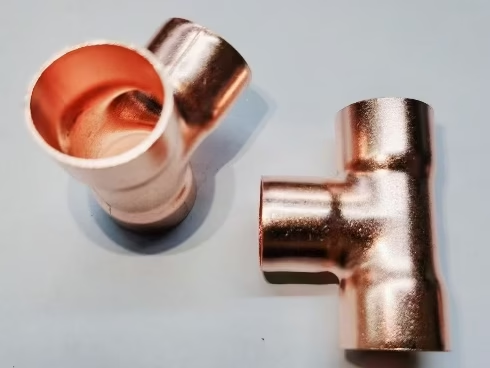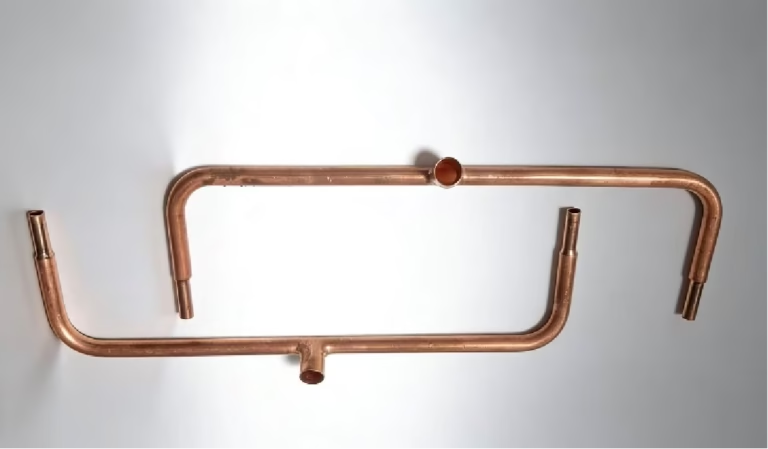
Copper branch fittings connect an additional tube to a main copper line, allowing fluid or refrigerant to flow between different sections of a piping system. They are used in refrigeration equipment, HVAC assemblies, heat exchangers, and custom copper tube circuits.
A branch connection may be a conventional tee, an angled junction, or a formed outlet integrated into the main tube. The appropriate design depends on the pipe layout, connection requirements, installation space, and operating conditions.
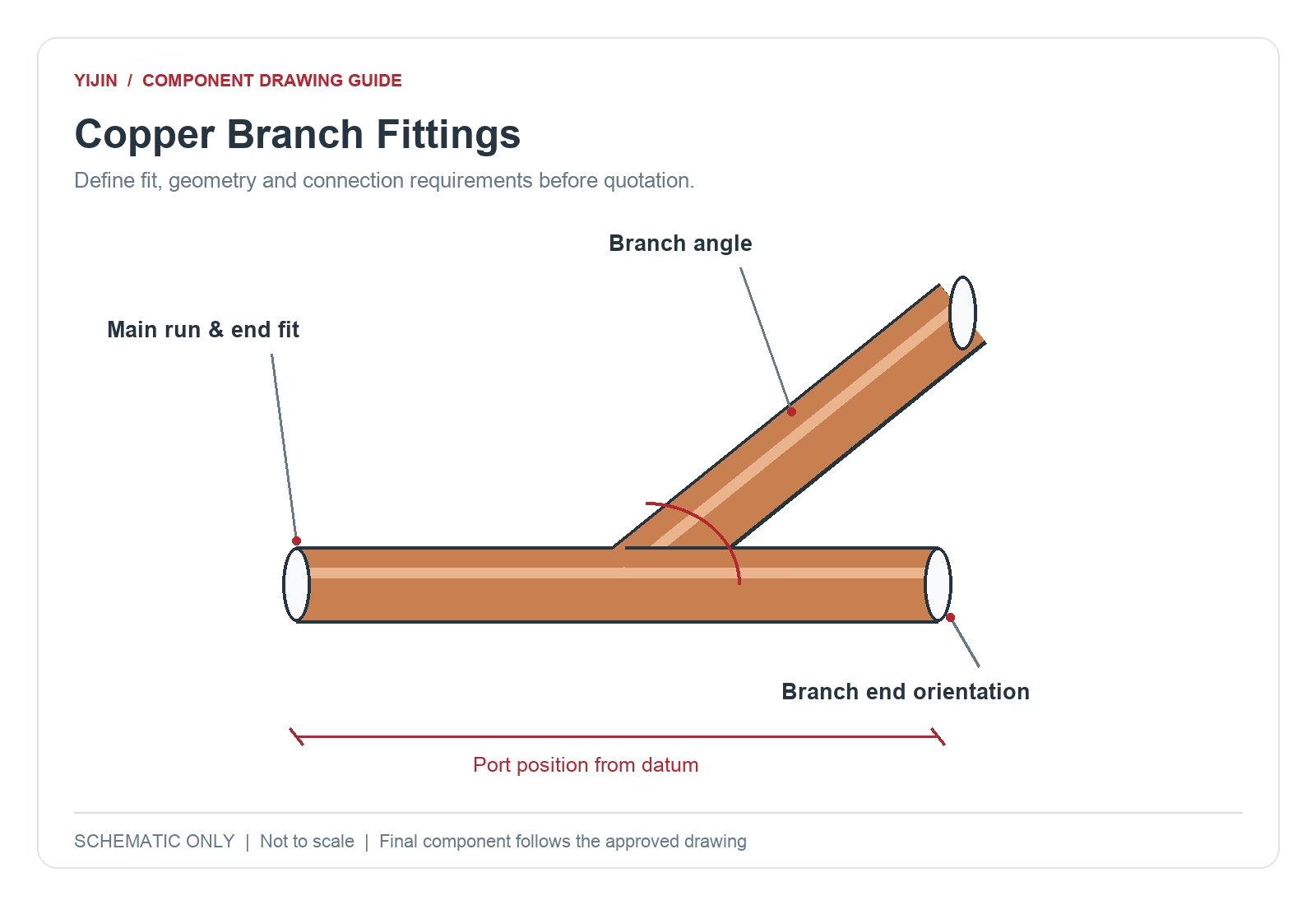
For custom copper branch fittings, the main design factors are tube diameter, branch position, branch angle, connection geometry, and joint integrity. These details determine whether the component can be manufactured accurately and assembled into the intended equipment.
This guide explains branch connection types, manufacturing methods, applications, and the information required for OEM production.
What Are Copper Branch Fittings?
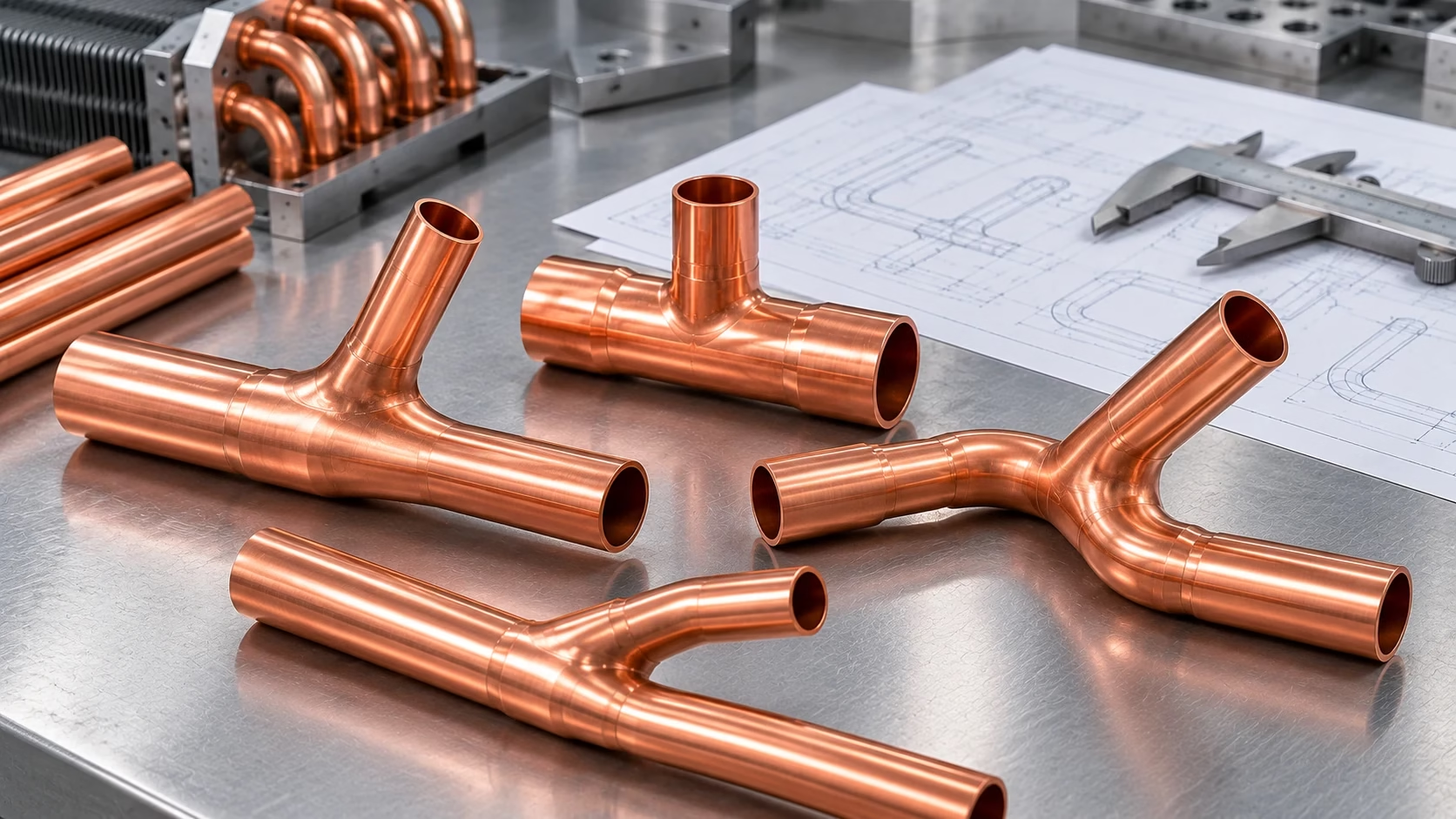
A copper branch fitting provides a connection between a main tube, commonly called the run, and one or more branch tubes.
The main tube carries flow through the primary circuit, while the branch provides an additional flow path.
Unlike a conventional tee fitting, which normally has a fixed T-shaped structure, a custom branch fitting may use different angles, branch positions, or tube geometries.
For example, a refrigeration assembly may require the branch outlet to be positioned close to a bend or oriented at a specific angle to connect with another component.
Branch fittings can be manufactured as separate fittings or integrated into a formed tube assembly.
The selected design must provide suitable flow passage, mechanical strength, and connection integrity for the intended service.
Common Types of Copper Branch Connections
Copper branch fittings can be classified according to their connection geometry and manufacturing structure.
Tee-Type Branch Connections
Tee-type connections have a branch that normally meets the main tube at approximately 90 degrees.
They are commonly used when three tube sections need to connect at a single junction.
Equal and reducing tee configurations are available depending on whether the main and branch tubes use matching diameters.
For a detailed comparison of these fitting types, see our guide to copper tee fittings for refrigeration.
Angled Branch Connections
An angled branch connection joins the main tube at an angle other than 90 degrees.
These configurations may be used when the equipment layout requires a different tube routing direction.
The branch angle must be defined in the engineering drawing, together with the branch location, tube sizes, and connection-end geometry.
An angled connection should not automatically be assumed to improve refrigerant distribution. Its hydraulic performance depends on the complete circuit design.
Mechanically Formed Branch Outlets
A mechanically formed branch outlet is produced by creating and forming an opening directly in the main copper tube.
A compatible branch tube can then be joined to the formed outlet.
This method may eliminate the need for a separate tee body and reduce the number of joints in suitable designs.
The Copper Development Association documents mechanically formed outlets for copper piping, including their forming and joining requirements.
However, not every tube size, wall thickness, or refrigeration application is suitable for this method. Forming feasibility and joint qualification must be confirmed before production.
Key Design Dimensions for Copper Branch Fittings
Accurate dimensions are important because branch connections must fit the surrounding tubing and equipment layout.
| Design Parameter | What It Controls |
|---|---|
| Main Tube Outside Diameter | Size of the primary tube connection |
| Branch Tube Outside Diameter | Size of the connecting branch |
| Tube Wall Thickness | Forming behavior and pressure capability |
| Branch Angle | Direction of the branch connection |
| Branch Position | Location along the main tube |
| Branch Height | Distance from main tube to branch end |
| End Connection Geometry | Fit with mating tubes |
| Dimensional Tolerances | Assembly alignment and consistency |
The branch position is particularly important in compact tube assemblies. If the outlet is too close to another bend or component, there may be insufficient space for forming, joining, or inspection.
The drawing should also define how branch position and angle are measured. Clear datum references help avoid interpretation errors during manufacturing.
For pressure-containing refrigeration components, the material and minimum wall requirements must be considered alongside the geometry.
Copper Branch Fitting Manufacturing Methods
Copper branch fittings can be produced using different manufacturing methods depending on their geometry and intended application.
Separate fitting fabrication involves manufacturing a branch fitting and connecting it to the main tube using an approved joining process.
Mechanical outlet forming creates a raised branch opening directly in the main tube. This process requires suitable forming tools and sufficient material around the outlet.
Tube assembly fabrication combines bent tubing, branch connections, and formed ends into a larger component.
Copper branch connections used in refrigeration systems are frequently joined by brazing.
The brazing procedure should specify suitable filler material, joint clearance, surface preparation, and process controls. Internal oxidation must also be controlled to maintain refrigeration circuit cleanliness.
For formed outlets, inspection should focus on local wall condition, outlet geometry, and the completed joint.
Manufacturers should select the process based on the approved component design rather than assuming that one joining or forming method is suitable for every branch configuration.
Applications in Refrigeration and HVAC Systems
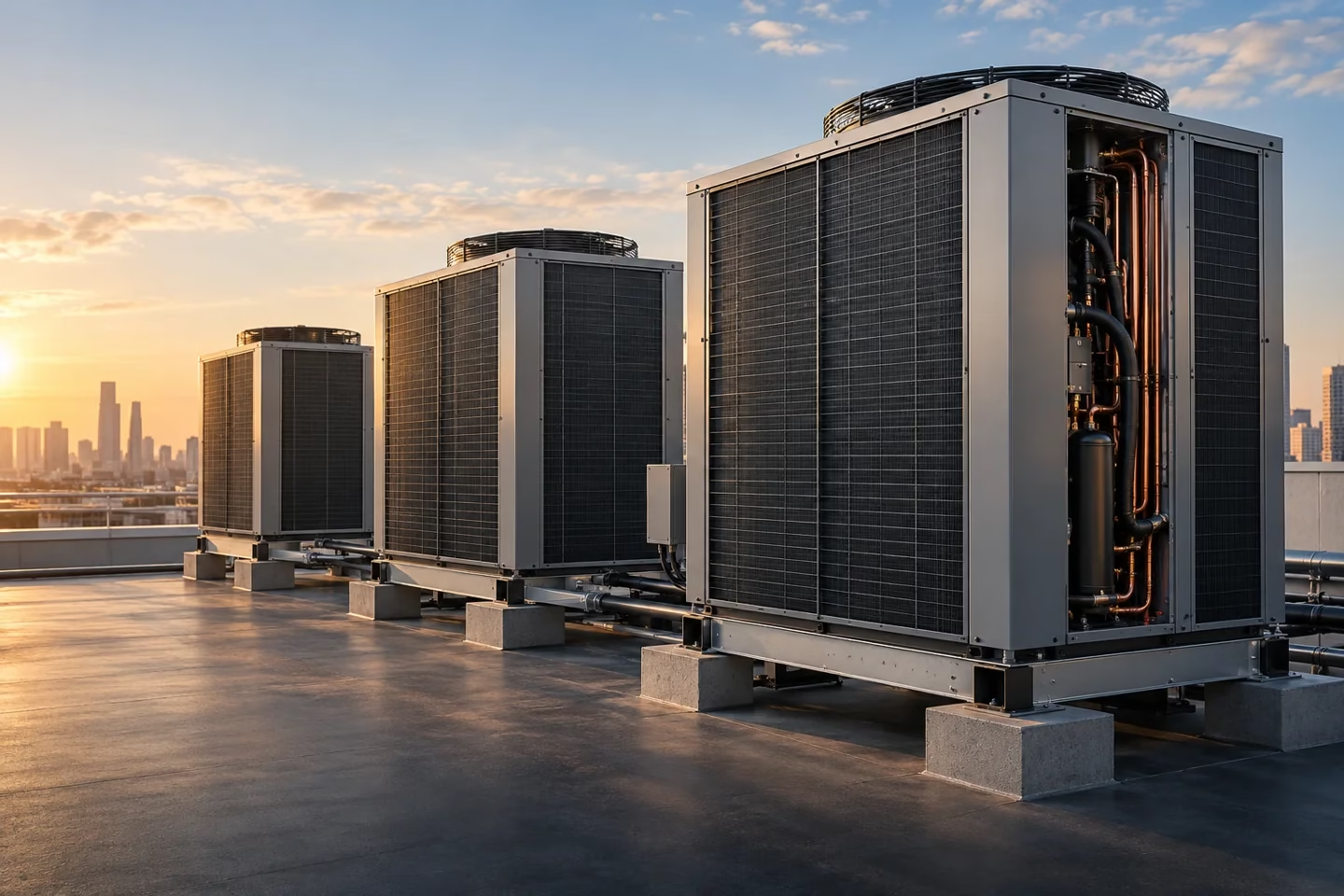
Copper branch fittings are used in equipment where multiple tube paths must connect within a limited installation space.
Refrigeration Piping Assemblies
Branch fittings may connect different sections of refrigerant piping in a system designed for multiple flow paths.
The branch diameter and orientation must match the circuit requirements, including operating pressure and refrigerant flow conditions.
A standard branch fitting should not replace a purpose-designed refrigerant distributor where controlled flow distribution is necessary.
Heat Pump and Air Conditioning Equipment
Compact heat pump and air conditioning assemblies may require custom branches to connect tubing around compressors, heat exchangers, valves, or supporting structures.
These designs can include short branch sections, angled connections, or specially formed ends.
Suitable geometry helps maintain assembly clearance and provides access for joining and inspection.
Custom Copper Tube Assemblies
For OEM equipment, branch connections can be integrated into formed copper tube assemblies with multiple bends and connection points.
This approach can simplify the positioning of individual components during final assembly.
However, manufacturing sequence, accessibility, joint quality, and dimensional tolerances must be reviewed before approving the design.
Common Design and Manufacturing Problems
Branch connection manufacturing requires control of both geometry and joint quality.
| Problem | Possible Cause | Recommended Action |
|---|---|---|
| Branch misalignment | Incorrect angle or position | Define clear drawing datums |
| Local wall thinning | Excessive outlet deformation | Review forming limits and tooling |
| Irregular outlet shape | Unsuitable forming conditions | Improve tooling and process control |
| Poor joint fit | Incorrect mating dimensions | Check joint clearance |
| Internal contamination | Inadequate cleaning or brazing control | Apply approved cleaning and joining procedures |
| Leakage | Material or joint defects | Perform specified integrity testing |
For mechanically formed outlets, the branch opening must provide adequate material and the correct shape for the intended joint.
Dimensional inspection should confirm the branch position, angle, and mating end alignment.
Where required, completed assemblies should undergo pressure or leak testing in accordance with the approved equipment specification.
How to Specify Custom Copper Branch Fittings
A complete technical drawing is the starting point for custom branch fitting manufacturing.
First, define the main and branch tube sizes. Include outside diameters, wall thicknesses, and copper material requirements.
Second, specify the branch geometry. Identify the branch position, angle, height, and required clearance from adjacent bends or components.
Third, define connection-end requirements. State whether the ends are plain, expanded, reduced, or prepared for a particular joining method.
Fourth, identify critical tolerances. Position and angle tolerances should reflect the assembly requirements.
Finally, provide inspection and order information. Include applicable cleanliness, pressure or leak-test requirements, estimated quantity, and any reference samples.
For complex OEM parts, a 3D model together with a dimensioned 2D drawing can improve manufacturing review.
Custom Copper Branch Fittings from Yijin
Yijin manufactures drawing-based Copper Branch Fittings for refrigeration and HVAC/R tube assemblies.
Our technical review covers the main tube route, branch position, connection geometry, and mating ends. Components are specified according to customer drawings and agreed inspection requirements.
For projects requiring multiple formed sections, our Formed Copper Tube Assemblies provide related customization options.
Send us your drawing, copper grade, tube dimensions, branch geometry, connection details, inspection criteria, and estimated order quantity. We can review the specification and prepare a quotation for the proposed component.
Frequently Asked Questions
1. What is a copper branch fitting?
A copper branch fitting connects an additional tube to a main copper line. It may use a tee-shaped junction, an angled connection, or an outlet formed directly in the main tube. Branch fittings are used in refrigeration, HVAC, and custom piping assemblies where multiple flow paths or connection points are required.
2. What is the difference between a copper tee and a copper branch fitting?
A copper tee normally refers to a three-port fitting with a T-shaped structure. Copper branch fitting is a broader term covering tee connections, angled branches, and mechanically formed outlets. Both can provide a branch connection, but the appropriate design depends on tube geometry, joining requirements, available space, and the approved circuit layout.
3. Can copper branch fittings be made with different angles?
Yes. Custom copper branch fittings can be designed with different branch angles where the geometry and manufacturing method permit. The drawing should define the angle, branch position, tube sizes, and connection ends. Angled branches may help accommodate equipment layout, but pressure drop and refrigerant flow behavior must still be evaluated as part of the system design.
4. What is a mechanically formed copper branch outlet?
A mechanically formed branch outlet is created by forming an opening in the wall of the main copper tube. A compatible branch tube is then joined to the outlet, commonly by brazing. This method can reduce the need for a separate tee fitting in suitable applications. Tube dimensions, wall condition, tooling, and joint requirements must be verified.
5. What information is required to order custom copper branch fittings?
Provide a technical drawing showing the main and branch tube diameters, wall thicknesses, copper material, branch position, angle, height, and connection details. Include critical dimensional tolerances, joining requirements, inspection criteria, and estimated order quantity. A 3D model or approved reference sample may also help clarify complex tubing configurations.
6. Can Yijin manufacture custom copper branch fittings?
Yes. Yijin manufactures copper branch fittings according to customer drawings for refrigeration and HVAC/R assemblies. Our review covers the main tube layout, branch location, connection geometry, material specifications, and inspection requirements. Customers can submit drawings, samples, and order quantities for manufacturing feasibility review and quotation.