
What HVAC assemblies need
HVAC copper tube assemblies must fit the equipment layout, maintain reliable refrigerant flow, and connect properly with other system components. Tube dimensions, bend geometry, and connection quality all affect installation and system performance.
Yijin manufactures custom copper tube assemblies according to OEM drawings, helping HVAC and refrigeration equipment manufacturers meet their installation and assembly requirements.
For OEM applications, the main requirements include:
Accurate Dimensions
Tube diameter, wall thickness, bend radius, and connection positions must match the equipment drawings.
Compact Tube Routing
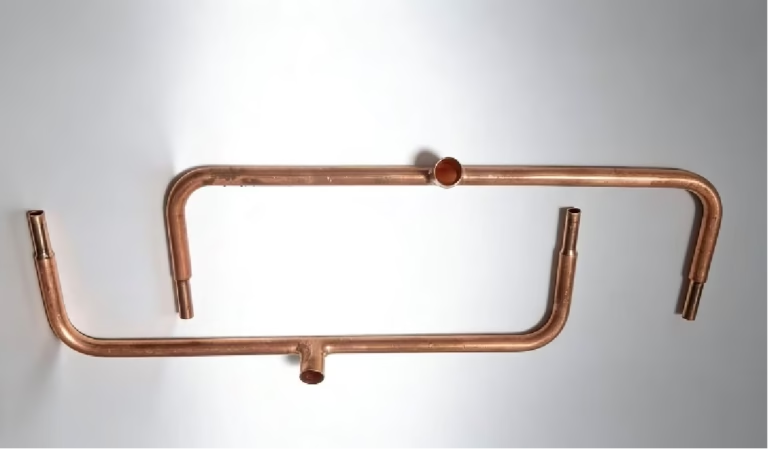
Bends and branch connections should fit within limited installation space without interfering with nearby components.
Reliable Connections
Tube ends must be properly formed for the specified brazing or joining process to help prevent refrigerant leaks.
Clean Internal Surfaces
Tubes should be free from excessive burrs, metal particles, and processing residues that could affect system operation.
A connection solution for your layout
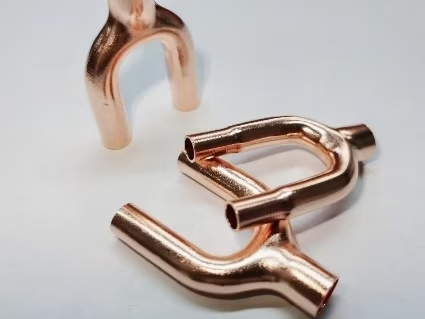
Yijin supplies copper tees, branch fittings and formed tube components for drawing-defined HVAC connections.
Combine junctions and tube routes around your equipment design. Material, dimensions and joining interfaces are confirmed during technical review.
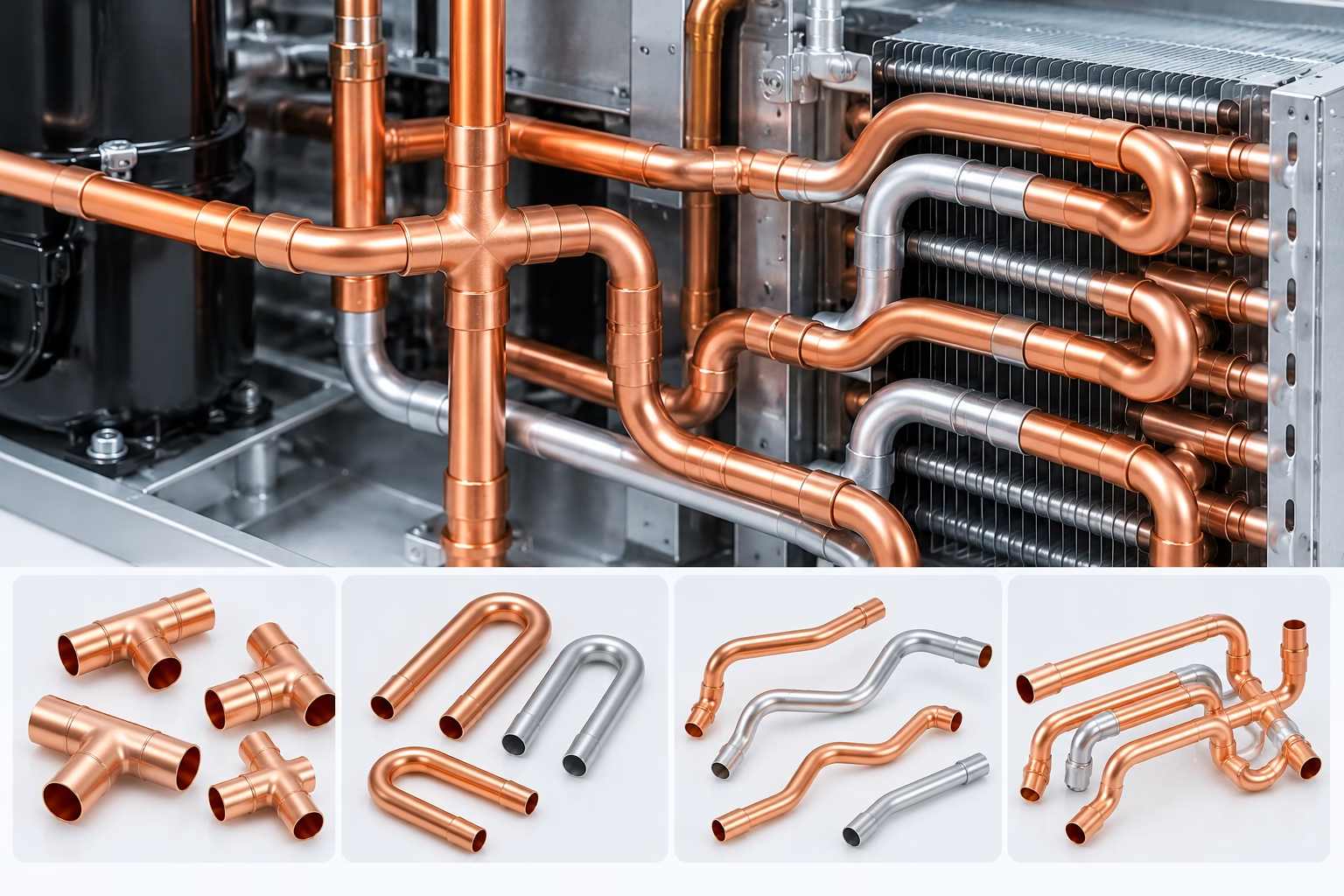
Components for HVAC connections
Select a component family, then confirm the details against your drawing.
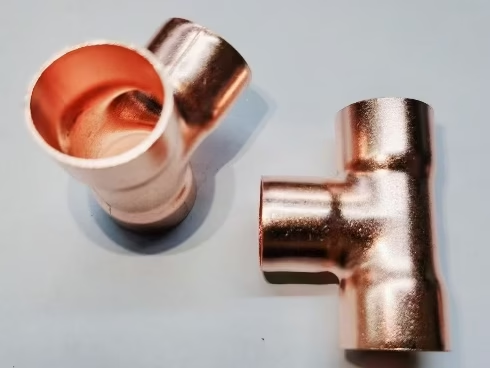
Branch & junction connections
Copper tees and branch fittings connect the specified tube paths. Explore tee and branch fittings →
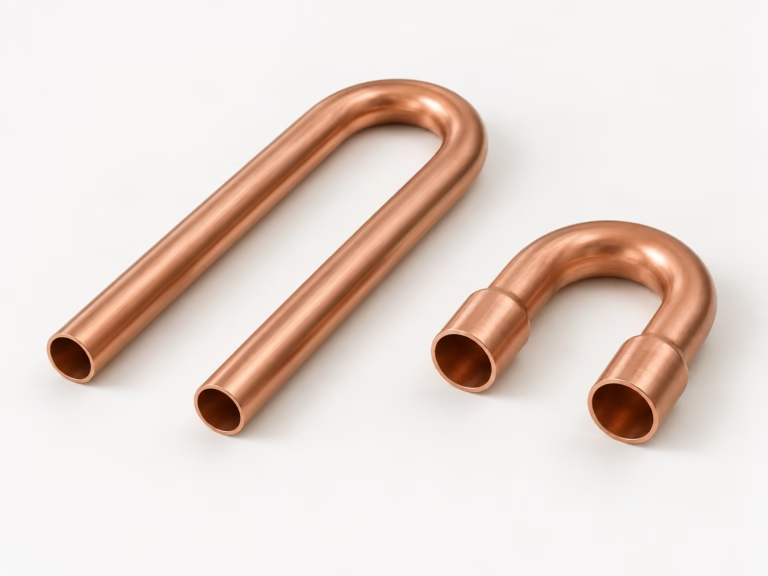
Return paths & tube routing
U-bends and formed assemblies connect tube sections around the available space. Explore bends and assemblies →
From drawing to production
Start with your equipment interface and part drawing. Agree the component scope, sample checks and acceptance requirements before production is confirmed.
Share the drawing: Include the layout, material and estimated quantity.
Review the connection: Confirm route, mating ends and critical dimensions.
Approve the sample: Check fit and the agreed inspection points.
Confirm production: Agree drawing revision, quantity and packaging.